
Davidson County Criminal Docket Searches
Start any criminal docket search at the Davidson County Criminal Court Clerk public search. It reaches criminal records for both General Sessions and State Trial Court. You can look up a person, a case number, or a complaint and incident number. For a person search, the first and last name are required. A date of birth is optional. Howard Gentry's office offers a warning. A name must be spelled the way it was entered at arrest. A common surname can pull up several different people. A case or complaint number is often the safer key.
The online route can fail. When it does, visit the Criminal Court Clerk at 408 2nd Avenue North, Suite 2120, Nashville, or call 615-862-5601. Posted docket sheets in the A.A. Birch Building and the clerk's reporting page give another view of current court settings. One more note: the statewide Tennessee Public Case History system covers appellate cases only. It cannot stand in for a Davidson County trial court lookup.
- Choose Person, Case Number, or Complaint/Incident Number in the official search.
- Enter the strongest exact identifier and check the court and division.
- Open the matching record and compare charge, date, and status.
- Check the reporting tab or current posted docket for the next setting.
- Ask the Criminal Court Clerk for an older file or certified judgment.
Davidson County Criminal Docket Portal
The Davidson County criminal docket portal splits its lookups three ways. A person search takes a first name, a last name, and an optional birth date. A case number search needs one thing. It takes the identifier exactly as it appears on the court papers. A complaint search pairs a complaint year with the complaint or incident number. That helps when no case number exists. You may still hold a citation, warrant, or incident paper.
The Criminal Clerk reporting area answers calendar questions rather than general name queries. It publishes the General Sessions Scheduled Appearance List, the Trial Court Criminal Dockets, and the Review Docket List. Bond-company appearances, bond mailing records, and attorney client calendars appear there too. A case result lays out a file's full event history, while a current report tells you which Davidson County criminal court docket is actually set for hearing. Each tool does a different job.
Be careful which clerk you ask. The official Circuit Clerk docket page carries the civil court schedule, not the criminal portal. Its docket navigation makes that split plain. Picking the right clerk comes before any search.
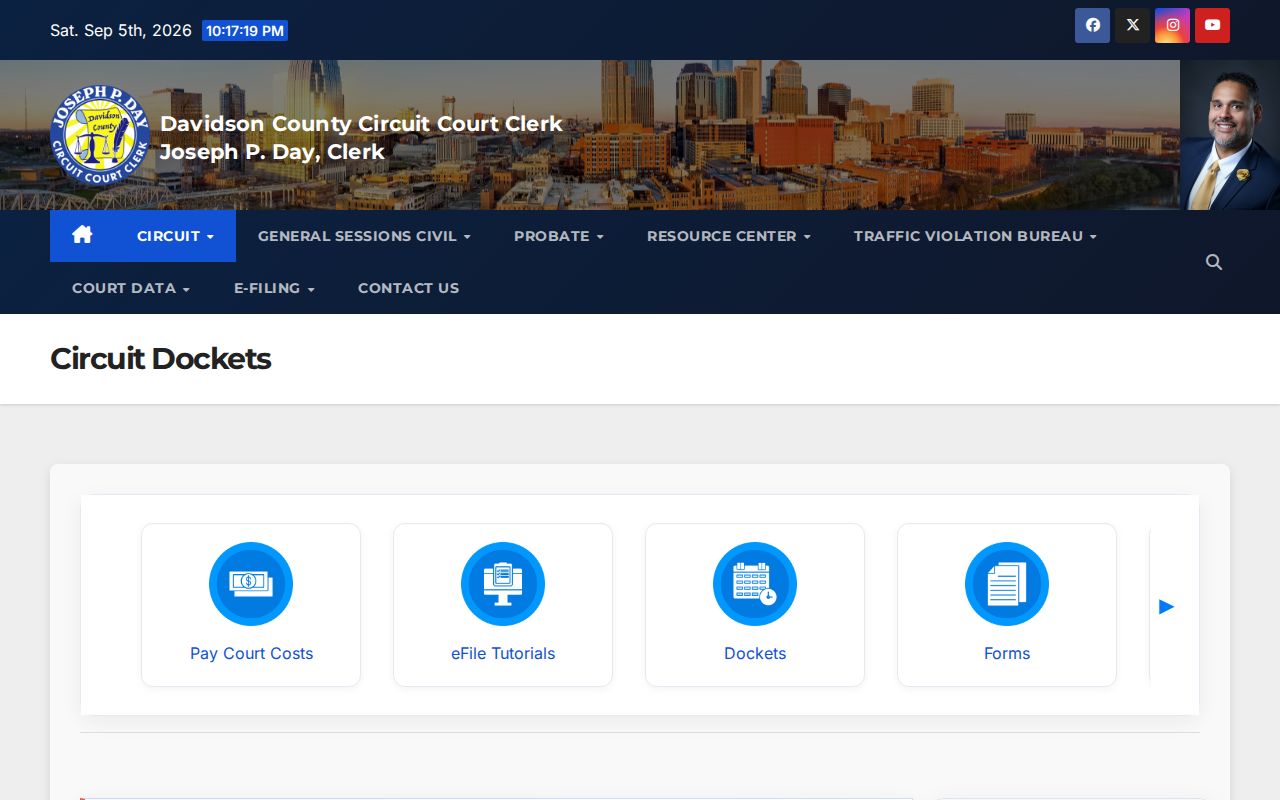
Because the online services are divided that way, a criminal search belongs with Howard Gentry's office. Follow it elsewhere only when the record itself points to another court.
Criminal Dockets: What They Show
A Davidson County criminal court docket opens with identity and routing fields. Read them together. The fields include case number, defendant status, court, division, and case status. Any complaint or warrant reference belongs there too. The charge block may list the offense description, statute, offense date, and classification. Bond data can show an amount. It may also list a type, a status, or a forfeiture. The event history comes next. It tracks appearances, counsel, the judge, and the courtroom. It also covers any plea, disposition, sentence, and costs.
| Case number | Enter the exact local identifier. GS commonly signals General Sessions, but no single countywide format is published. |
|---|---|
| Charge and bond | Offense text, statute when shown, incident reference, bond type, bond status, and warrant or capias entries. |
| Settings | Appearance date, courtroom, judge, attorney, and reason such as arraignment, pretrial, trial, or review. |
| Plea and result | Plea, dismissal, nolle prosequi, acquittal, conviction, diversion, sentence, costs, or other disposition. |
| Access status | Public result, legacy coverage, restriction, or an expungement exclusion notice. |
A dated entry is only an event. A continuance moves a hearing to a new date; a signed judgment settles the case. When you need real proof of the outcome, get the judgment itself from the Davidson County Criminal Court Clerk.
Davidson County Criminal Docket Eras
Coverage on the online Davidson County criminal docket splits into eras. Legacy records run from 1980 up to the launch of the newer criminal information system. CJIS disposition entries begin January 11, 2000 for General Sessions. State Trial Court entries begin July 11, 2000. Those dates matter. Gaps can appear near the century mark. The two court levels can show different depths of electronic history.
Need a pre-1980 criminal file? Contact the Criminal Court Clerk directly. A blank result does not mean no case existed. Check the arrest spelling first, then try a case number. Confirm the complaint route, verify the court level, and pin down the year. Public results sometimes leave out birth dates, so the clerk recommends in-person verification for an official match. Davidson County criminal court docket entries can also change as corrections and updates come through.
The Circuit Clerk offers a counter-based route as well. Read the official records policy links before asking that office for anything it keeps. Criminal files stay with the criminal clerk. Aim each request at whichever office truly holds the record.
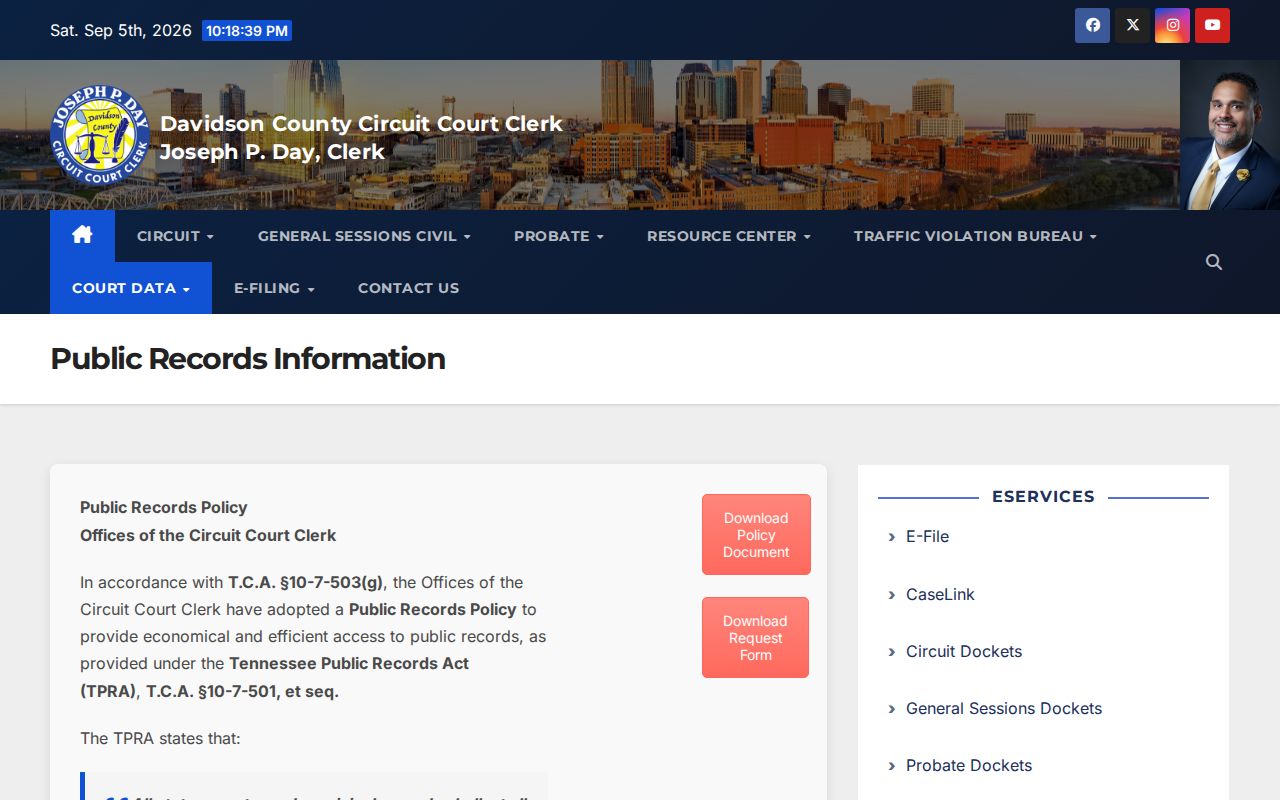
Criminal files live with the criminal clerk. The point of the page above is simple Davidson County practice: send every request to the office that actually maintains the record you want.
Criminal Case Stages on the Docket
A Davidson County prosecution can start several ways. The triggers include complaint, citation, indictment, warrant, arrest, or bond. An initial appearance or arraignment comes next. General Sessions may hold a preliminary hearing on whether a felony should move forward. If the answer is yes, a grand-jury indictment can send the matter to Criminal Court. From there the docket tracks pretrial settings and motions. Then comes a plea or trial. Disposition, sentencing, probation review, and any appeal follow.
Docket flow: Filing › Arraignment › Pretrial › Plea or Trial › Disposition › Sentencing
Skip the first date you see on a Davidson County court docket. Read the newest entry instead. CONT or RESET means the hearing moved to a new day. CONCLUDED or CLOSED marks the matter complete, though the entry never says why. NOLLE PROSEQUI tells you prosecutors dropped the charge. A capias is an order to bring someone before the court. Diversion is a conditional outcome. Its terms sit in the order itself, so check there.
Davidson County Criminal Docket Labels
Davidson County spreads criminal business across many sessions rather than one daily list. Bond, jail, state traffic, domestic violence, mental health, veterans, felony drug, recovery, and review dockets all appear on official schedules. The label carries meaning. A bond docket deals with release terms. A preliminary hearing docket tests whether a felony case moves forward. A review or probation docket instead checks compliance after disposition.
Reading labels also guards against a common mistake. A case found in the portal does not carry its current courtroom with it. Match the latest event against the General Sessions Scheduled Appearance List or Trial Court Criminal Dockets. Then confirm any changed date with the clerk. City ordinance traffic usually runs through TVB or a city court. Juvenile matters live in a separate restricted system.
For contrast, the Probate and Circuit schedule hub shows how noncriminal calendars work. Its published docket page sorts those calendars by court and judge.
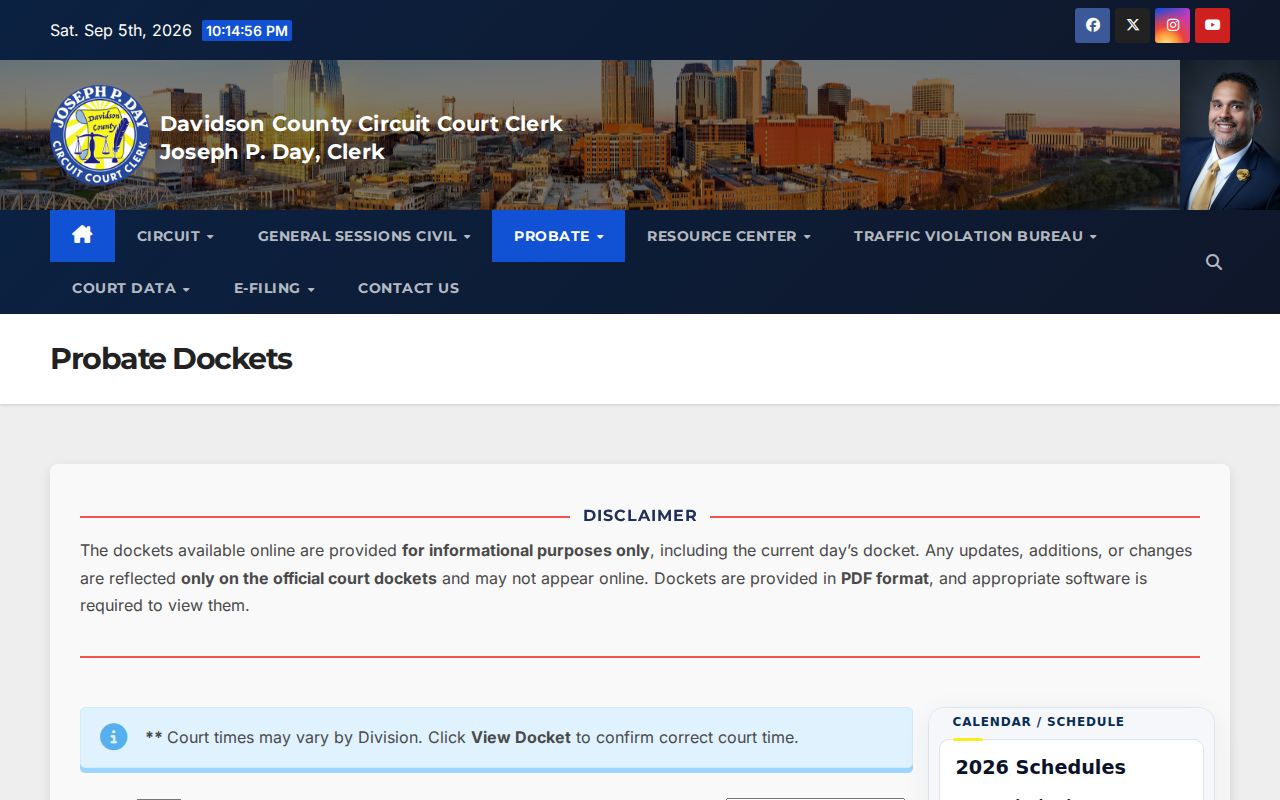
That probate and circuit schedule is not a criminal tool, though both systems share the word docket. A Davidson County criminal docket search should stay on the criminal clerk's own portal instead.
Davidson County Criminal Docket Courts
General Sessions Criminal Court tries misdemeanors within its 11-month-and-29-day penalty limit and also handles preliminary hearings, appearance bonds, search warrants, and property forfeitures across 11 divisions. Criminal Court has six divisions for indicted and serious felony cases. Both courts run through the Criminal Court Clerk's public search, but each Davidson County criminal court docket keeps its own division and calendar path.
The criminal clerk's office sits in Suite 2120 of the A.A. Birch Building, 408 2nd Avenue North. For the file route, call 615-862-5601; General Sessions information is also at 615-862-8317. Posted daily sheets offer a quick check in person. Once an appeal leaves, it builds a separate history in Tennessee Public Case History, where the record, briefs, submission, opinion, and disposition may appear.
The civil side of the same lower court is described on the General Sessions Civil clerk page. See the official office description for the civil custody and jurisdiction split.
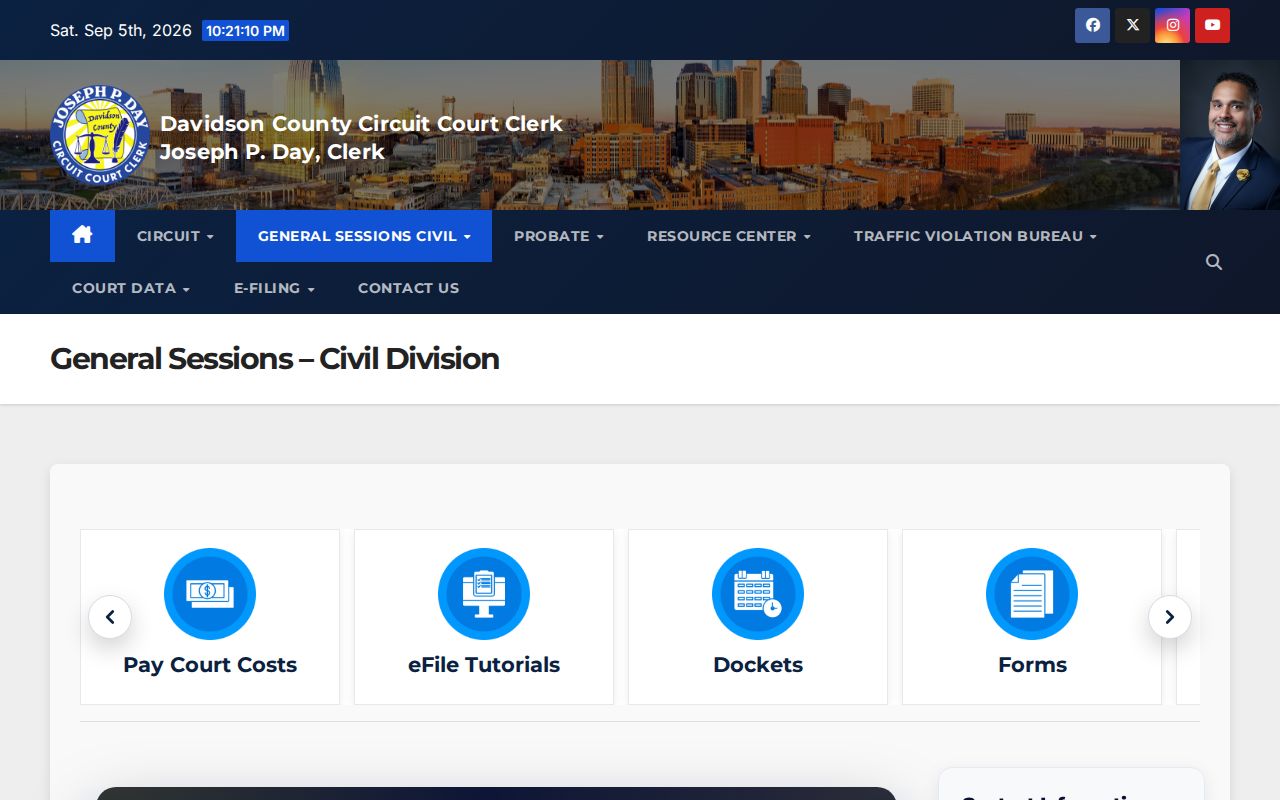
That division of labor explains where a criminal warrant really goes. It belongs with Howard Gentry's office, not the Circuit Court Clerk's civil search.
Davidson County Criminal Docket Proof
Think of the public Davidson County criminal docket as an index plus an event history. It answers the quick questions. What is the charge? Which division holds the case, when is the next setting, and how did it end? It cannot replace the indictment, the signed sentencing order, or a certified judgment. Screens also shift over time, and an old calendar can linger after a reset.
When you need the official record, ask the Criminal Court Clerk for the underlying document itself. Supply the case number, the court, the document title, and its date if you know it. Staff may have to research older material. Certified copies come from the clerk, not from a printed page or an appellate search. For more on lookup fields across Davidson courts, the Davidson County docket search sorts out the trial, Chancery, traffic, and appellate routes.
Davidson County Criminal Docket Appeals
An appeal never drags every trial entry into one statewide screen. The Davidson County criminal court docket stays with the trial clerk, and the appeal gets its own record in Tennessee Public Case History. There you may find the appeal filing, the arrival of the trial record, briefs, submission or oral argument, the opinion, and the disposition. The system covers the Tennessee Court of Criminal Appeals and Supreme Court, not ordinary trial-level searches.
Question about the original charge, plea, or Davidson setting? Start at Howard Gentry's portal. Turn to Public Case History only after an appeal is filed, and match the appellate case back to its trial number and court. That two-docket trail keeps an appellate update from being mistaken for a change to a General Sessions or Criminal Court appearance.
Access Rules for Criminal Dockets
Tennessee opens most court records to the public, but the rule bends. A Davidson County criminal docket can omit sealed material, juvenile files, confidential data, and expunged charges. Howard Gentry's office says expunged charges and citations never come back in its public search. Dismissal works differently. A dismissal is a disposition. It may stay on the public docket unless some other legal action restricts it.
Key rules:
Tennessee Supreme Court Rule 34 generally opens court records unless law, rule, or a court order makes them confidential.
Tennessee Public Records Act, T.C.A. § 10-7-503 permits Tennessee citizens to inspect open local records during business hours, subject to exceptions.
T.C.A. § 40-32-101 governs criminal expunction, and the Criminal Clerk warns that expunged information is not publicly returned.
Missing record? Confirm the custodian and the identifier before assuming restriction. Ask whether the matter is juvenile, sealed, expunged, or simply outside electronic coverage. The Davidson County Criminal Court Clerk can say what is legally available and issue a certified copy when permitted.